





Explosion-Proof Overhead Crane

Flammable and explosive environments

Mongólia
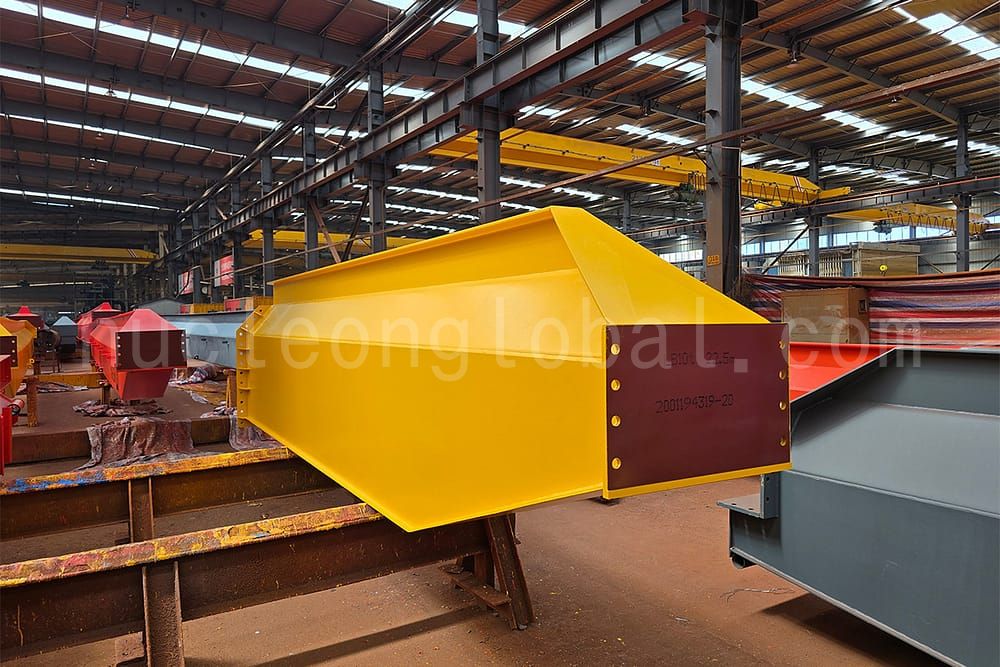
We have been exporting explosion-proof overhead cranes for years, and this Mongolia project is a great example of balancing explosion protection requirements with cost control.
The customer was looking for an ponte rolante à prova de explosão for their factory in Mongolia, with strict requirements for explosion-proof performance and enclosure protection. At the same time, the project budget was limited, so they needed a solution that could meet safety standards without adding unnecessary costs.
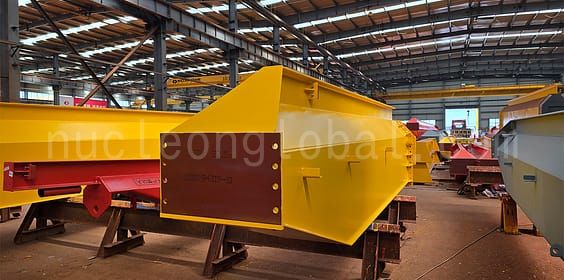
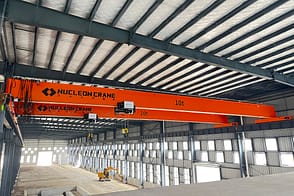
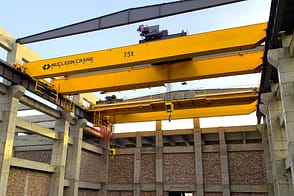
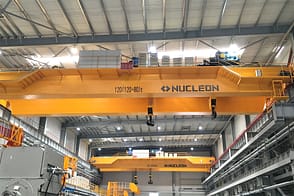
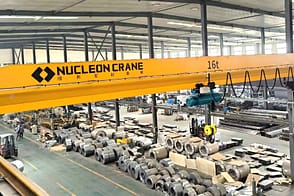
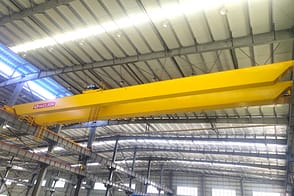
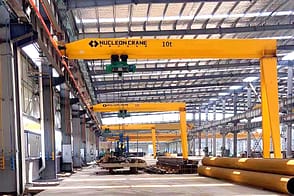
In the end, we delivered two 10-ton LB Single Girder Explosion-Proof Overhead Cranes that successfully met all these requirements. From solution design and technical discussions to production, packing, and shipment, the complete crane system was around 30% more cost-effective than a European-style explosion-proof solution and arrived in Mongolia by road transport within 8 days.
In this case, I will walk you through how we approached this project and how we developed the final solution.
Key Challenges of the Mongolian Project
First, let's look at the customer's actual situation. This was a factory in Mongolia operating under conditions with potential flammable and explosive hazards. The cranes used in the workshop could not rely on standard electrical configurations—the entire system had to be designed with explosion-proof protection. Safety was the top priority and there was no room for compromise.
The customer already had a clear technical specification: 10-ton lifting capacity, 22.5 m span, 18 m lifting height, and an AT3 explosion-protection requirement. Their needs were straightforward: they were looking for a manufacturer that could provide reliable explosion-proof performance, meet the required protection levels, and offer a reasonable price.
The key challenges of this project were:
- The first challenge was the explosion-protection and ingress-protection requirements. The customer initially required an AT3 explosion-protection rating for the Explosion-Proof Overhead Crane, along with Schneider Electric components, IP55 motors, and IP65 control box enclosures. These requirements set a relatively high technical standard for the equipment.
- The second challenge was how to control the project budget while meeting the explosion-proof performance requirements. For explosion-proof cranes, the cost difference is not only determined by lifting capacity or crane structure. Explosion-proof motors, explosion-proof electrical enclosures, special wiring protection, explosion-proof certifications, and customized protection measures all add additional costs. This is also one of the main reasons why explosion-proof equipment is generally more expensive than standard cranes.
Como personalizamos a ponte rolante à prova de explosão?
Especificações técnicas
Uma vez selecionada a solução, o trabalho árduo consistia em transformar cada requisito específico em desenhos e detalhes de produção. As especificações finais do guindaste foram as seguintes.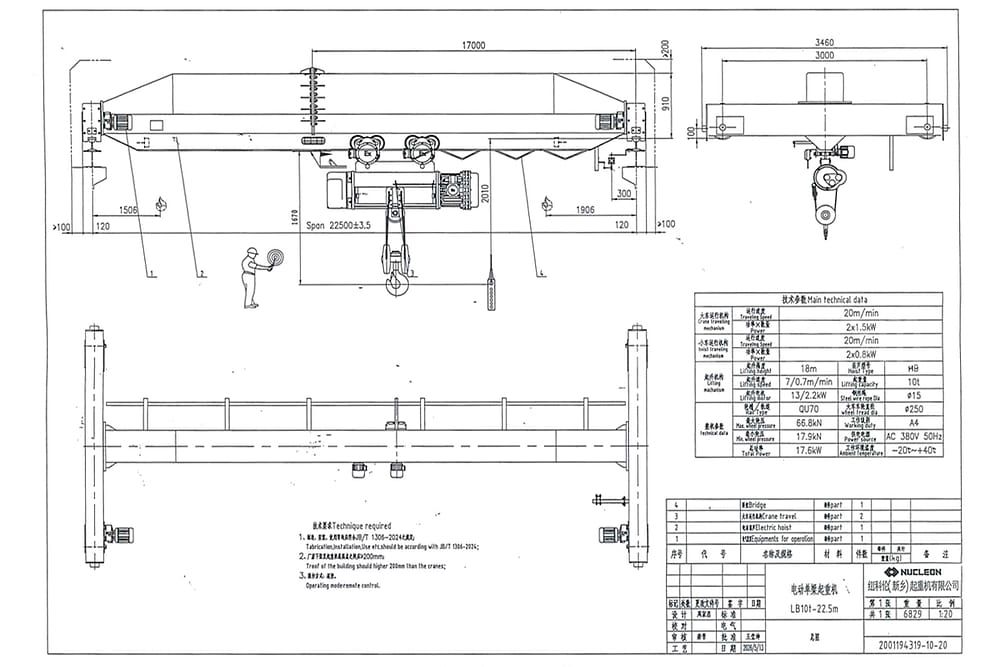
- Capacidade: 10 toneladas
- Vão: 22,5 m
- Altura de elevação: 18 m
- Proteção contra explosões: Exd II BT4
- Fonte de alimentação: 380 V, 50 Hz, trifásica
- Método de controle: Controle remoto sem fio
- Quantidade: 2 conjuntos
Four Custom Features for the Mongolia Crane Project
1. First came the explosion-protection rating: The customer initially requested an AT3 explosion-proof rating, while NUCLEON's explosion-proof crane products start from the BT4 level as standard. During the technical review, we further explained the differences between the various explosion-proof classifications to help the customer better understand the protection levels.
In explosion-proof equipment classification, A and B represent gas groups, while T3 and T4 represent temperature classes. They are two different evaluation criteria.
The gas group indicates the type of explosive atmosphere the equipment is designed for:
- IIA: Suitable for flammable gas environments with relatively lower hazard levels.
- IIB: Suitable for medium-risk flammable gas environments, with higher protection requirements than IIA.
Simply put, IIB equipment can be used in IIA environments, but IIA equipment cannot replace IIB equipment.
The temperature class defines the maximum surface temperature allowed during equipment operation:
- T3: Maximum surface temperature ≤200°C
- T4: Maximum surface temperature ≤135°C
Compared with T3, T4 requires a lower operating surface temperature, further reducing the risk of igniting surrounding flammable gases. Therefore, T4 provides a higher level of temperature protection.
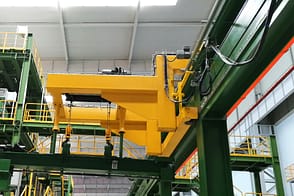
After reviewing the actual working conditions with the customer, we finally supplied the crane according to the higher safety standard, adopting an Ex d II B T4 flameproof protection design. The final delivered equipment was an LB Explosion-Proof Overhead Crane, equipped with explosion-proof motors, explosion-proof control boxes, explosion-proof push buttons, and complete explosion-proof certification documents.
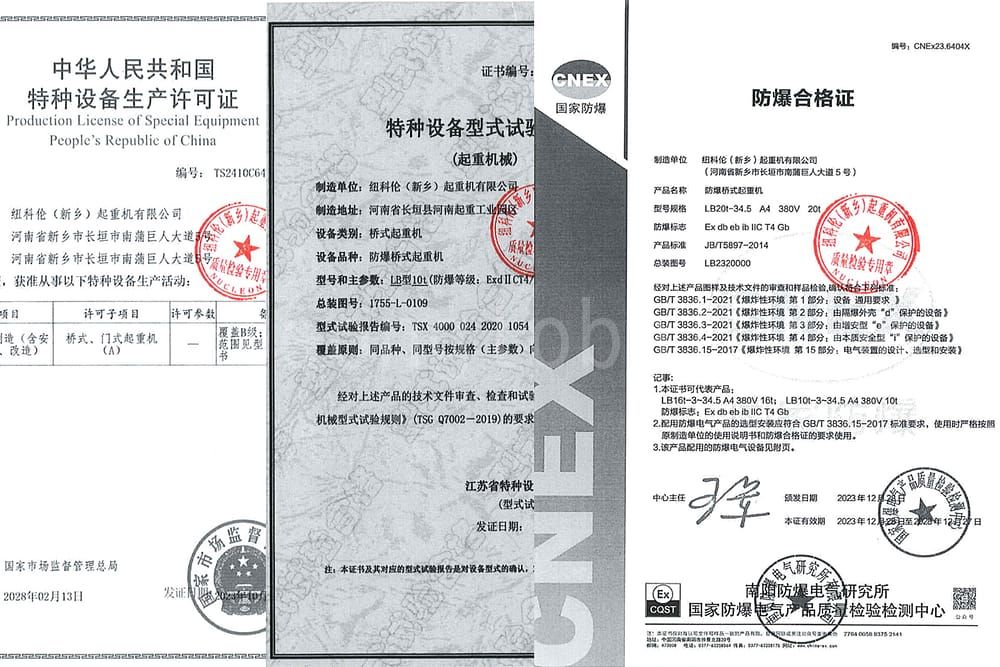
The biggest challenge in an explosion-proof project is not the complexity of the technical parameters, but whether the requirements are fully understood at the beginning. If the explosion-proof rating, gas group, and temperature class are not clearly confirmed in advance, it can easily lead to equipment mismatches, certification issues, or even costly rework at a later stage.
Therefore, confirming these details before production is a crucial step to ensuring the successful delivery of the project.
2. Electrical configuration: O cliente especificou componentes da Schneider Electric para o sistema elétrico, e configuramos todo o guindaste com componentes elétricos da Schneider Electric de acordo com essa especificação. Isso não só melhora a estabilidade geral do sistema, como também garante maior compatibilidade e facilidade para futuras manutenções e substituição de peças de reposição.
For overseas customers, this is especially important. In case any electrical components need to be replaced in the future, globally recognized brands like Schneider Electric are easier to source locally, helping reduce maintenance difficulties and minimize potential downtime.
3. Ingress protection: O NÚCLEÃO LB Explosion-Proof Single Girder Overhead Crane comes standard with IP55 motors and IP65 control box enclosures, which perfectly match the customer's protection requirements without requiring any additional upgrades.
By using the standard configuration, the crane not only meets the required protection level but also helps reduce unnecessary extra costs. This allowed us to provide a reliable explosion-proof solution while maintaining better cost efficiency for the project.
4. Control method: The Explosion-Proof EOT Crane is operated by wireless remote control and uses a 380V / 50Hz / three-phase power supply. In an explosion-risk workshop, operators can maintain a safe distance from the equipment while enjoying greater flexibility during operation.
LB Overhead Crane or European-Style Overhead Crane?About 30% Saved Without Sacrificing Performance
Inicialmente, oferecemos ao cliente duas opções: um guindaste monoviga à prova de explosão LB e um guindaste monoviga à prova de explosão de estilo europeu. Ambos atendiam às especificações essenciais de capacidade de 10 toneladas, vão de 22,5 m e altura de elevação de 18 m. As principais diferenças residiam no projeto estrutural, no peso próprio e no preço.
O design de estilo europeu é mais compacto. Para este projeto, no entanto, as verdadeiras prioridades do cliente eram proteção confiável contra explosões, proteção adequada da estrutura, operação confiável e um preço razoável — não a estrutura mais leve possível. Quando as duas cotações foram comparadas lado a lado, a ponte rolante LB completa era cerca de 30% mais acessível.
Após comparar as opções, o cliente escolheu a ponte rolante LB. Isso reflete um princípio que seguimos em projetos internacionais: nosso trabalho não é vender a ponte rolante mais cara, mas sim ajudar cada cliente a escolher aquela que melhor se adapta às suas necessidades.
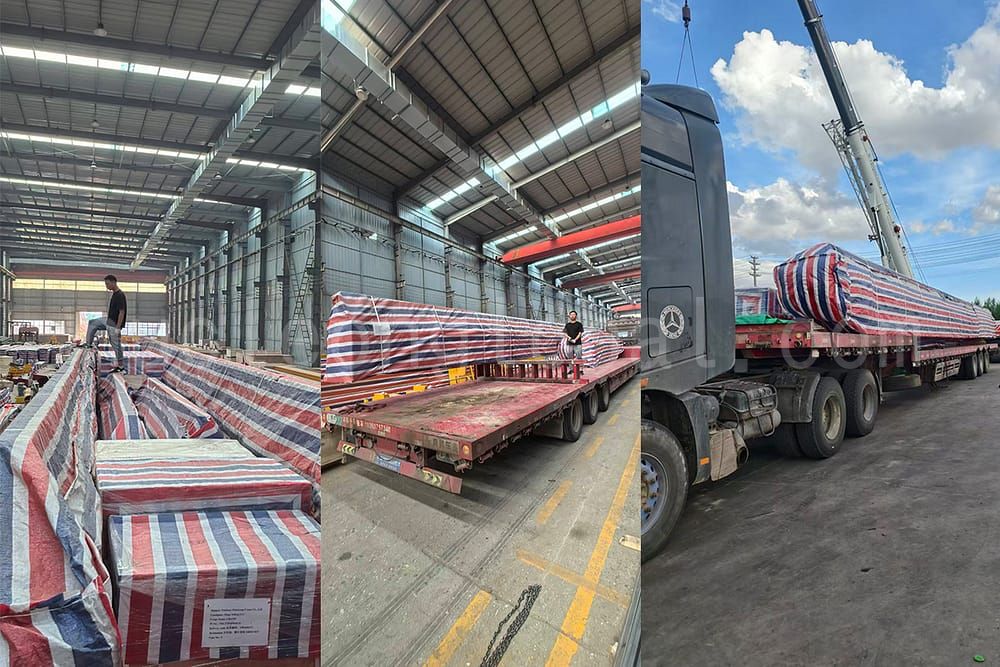
Embalagem resistente às intempéries, caixas de madeira e entrega rodoviária em 8 dias.
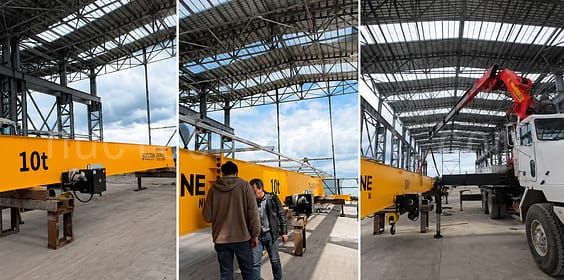
A Mongólia não tem saída para o mar, então os guindastes de pórtico à prova de explosão foram enviados por via terrestre. Consequentemente, a embalagem teve que suportar o transporte terrestre de longa distância, bem como o possível armazenamento após a chegada.
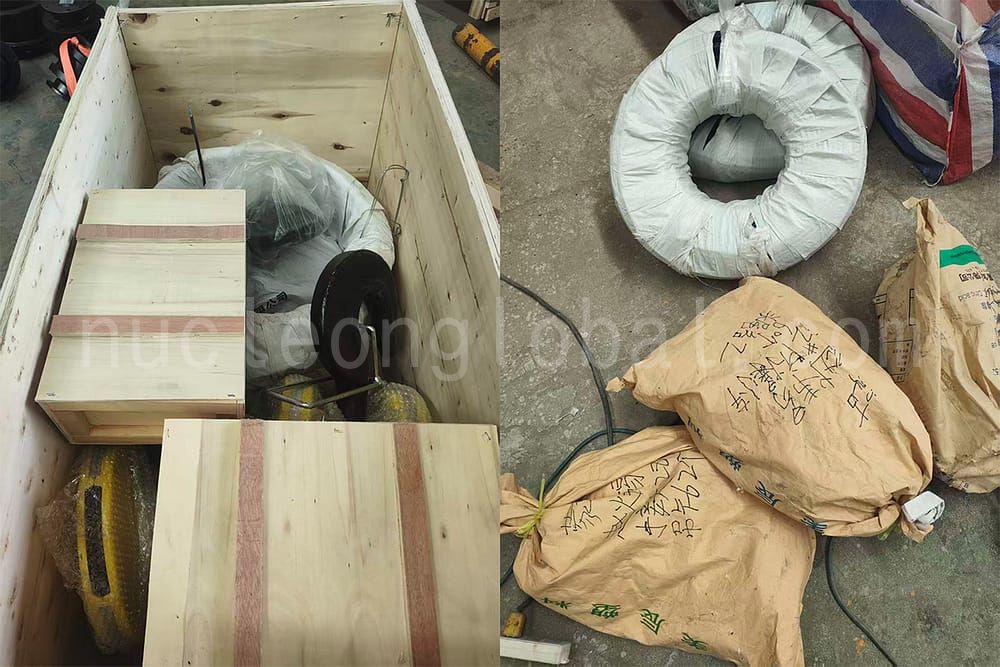
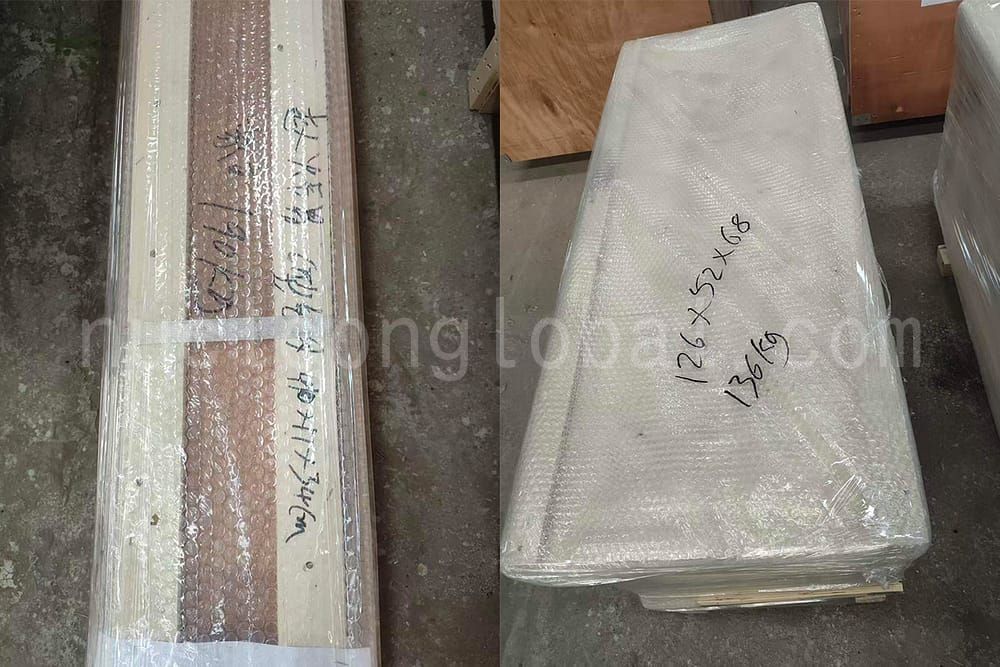
Envolvemos as principais estruturas de aço em lona impermeável para protegê-las da chuva e da poeira durante o transporte. Componentes de precisão e vulneráveis, incluindo os painéis elétricos e os guinchos, foram embalados separadamente em caixas de madeira, com uma camada interna adicional de filme protetor. Ambos os guindastes foram fixados com segurança e devidamente acolchoados antes do carregamento. A viagem por terra até a Mongólia durou oito dias. Também mantivemos um registro fotográfico completo da embalagem e do transporte para que o cliente pudesse verificar o estado da carga comparando-a com as fotos na chegada.
Resultados de entrega de pontes rolantes à prova de explosão
The two 10-ton LB Explosion-Proof Single Girder Overhead Cranes were successfully manufactured and shipped according to the customer's confirmed technical requirements. The final configuration included an Ex d II B T4 explosion-proof rating, Schneider Electric components, IP55/IP65 protection levels, wireless remote control, complete explosion-proof certificates, and production drawings. The cranes were delivered to Mongolia by road transportation within 8 days.
From solution comparison and protection upgrades to inland logistics arrangements, we helped the customer find the right balance between safety, performance, and cost efficiency. The project not only reduced unnecessary investment but also ensured that the customer's most important concern—explosion-proof compliance and operational safety—was fully achieved.
Let's Talk About Your Explosion-Proof Overhead Crane Project
If you have a similar project that requires explosion-proof compliance or you are looking for ways to reduce costs while still meeting safety requirements, feel free to contact us for discussion, no matter where your project is located.
NÚCLEÃO's engineers will evaluate your actual working conditions, hazardous area classification, and technical requirements to provide a one-on-one crane selection solution and quotation tailored to your application.

Sou Novia, estou envolvida na exportação de guindastes há 10 anos, atendendo clientes em 20 países. Possuo uma reserva de conhecimento profissional sobre a estrutura e desempenho de diversos tipos de guindastes. Da cotação ao plano de projeto até a entrega, fornecerei um serviço personalizado para fornecer a solução de guindaste mais econômica e profissional. Se você precisar comprar um guindaste, entre em contato comigo para obter o serviço mais recente.